
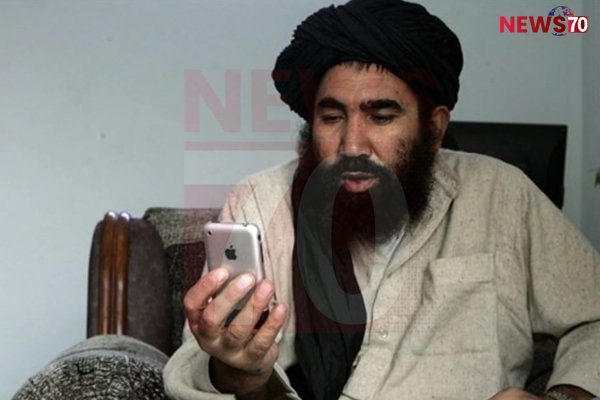
Afghans celebrated the restoration of internet and telecom services after a 48-hour Taliban-imposed blackout. The shutdown disrupted businesses, flights, and communication, particularly affecting women and girls, but services were partially restored by Wednesday, bringing relief and joy across Kabul.
Afghans have poured into the streets to celebrate the return of internet and telecom services after the Taliban government had shut them down, drawing widespread criticism.
Local reporters noted that communications were gradually resuming, while internet monitor Netblocks reported network data indicating a "partial restoration" of connectivity.
A source close to the government confirmed to BBC Afghan that the internet was reinstated by order of the Taliban prime minister.The 48-hour blackout had disrupted businesses and flights, limited access to emergency services, and raised concerns about further isolating women and girls, whose rights have been heavily curtailed since the hardline Islamist group regained power in 2021.
On Wednesday evening, hundreds of Afghans in the capital city of Kabul took to the streets to spread the news that the internet was back.One man told BBC Afghan: "Everyone is happy, holding their cell phones and talking to their relatives. From women, to men and Talibs [a member of the Taliban], each was talking on phones after services were restored. There are more crowds now in the city."Suhail Shaheen, a senior Taliban spokesman in Qatar, stated that "all communications" had been restored by Wednesday afternoon.
The Taliban government has yet to provide an official explanation for the shutdown. Last month, however, a spokesperson for the Taliban governor in the northern province of Balkh said internet access was being blocked "for the prevention of vices."Since their return to power, the Taliban have implemented numerous restrictions based on their interpretation of Islamic Sharia law.Afghan women have told the BBC that the internet has been a crucial lifeline to the outside world, especially after girls over the age of 12 were banned from receiving an education.Job opportunities for women have also been severely restricted, and in September, books authored by women were removed from universities.
Following the shutdown on Monday, the UN warned that Afghanistan was left nearly cut off from the world. The blackout risked "inflicting significant harm on the Afghan people, including by threatening economic stability and exacerbating one of the world's worst humanitarian crises."During the blackout, central Kabul was noticeably quieter, with banks closed and shopping centres largely empty.All international money transfers were halted, preventing essential funds from relatives abroad from reaching Afghan families.Afghans living overseas phoned BBC Afghan radio programs, hoping their messages would reach family members still in the country.
Travel agents were either closed or operating only partially to provide information, and flights in and out of the country were cancelled."This is the gradual death," one shopkeeper said. "When there is no hope, no chance of progress, no freedom of speech, no optimism for the future of your child, no stability for your business, where you can't benefit from your studies."But on Wednesday, spirits lifted as people regained access to the internet and could communicate again.
Delivery driver Sohrab Ahmadi said: "It's like Eid al-Adha; it's like preparing to go for prayer. We are very happy from the bottom of our hearts."Mah, a 24-year-old who fled Afghanistan in 2021 and is now studying in the UK, said she was in tears when she finally spoke to her family still in Afghanistan."When I spoke to my mum, I cried, I was happy," she said. "At least I can hear her voice."She added, "You don't know what's going to happen next in Afghanistan because nothing's under control."