
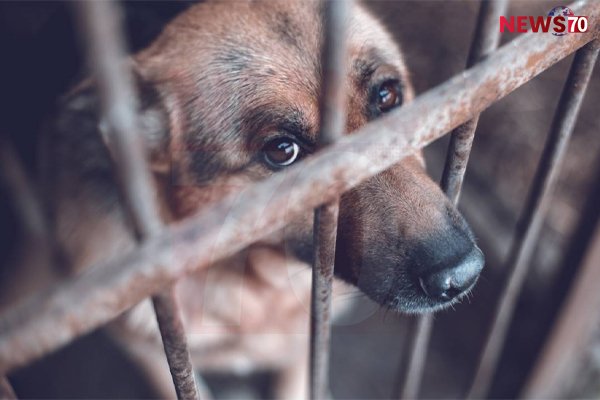
Bangladesh continues to witness disturbing acts of animal cruelty, such as drowning puppies, poisoning dogs, and killing cats, many of which surface only through social media attention. Although the Animal Welfare Act 2019 offers stricter penalties, most cases face delays due to legal limitations, non-cognizable sections, and lack of awareness among authorities. Only a few incidents lead to convictions, and many offenders evade justice. Activists argue that slow judicial processes, limited enforcement power, and the absence of shelters hinder progress. They call for stronger implementation of laws, nationwide awareness, and coordinated government action to ensure meaningful animal protection.
A disturbing act of cruelty was recently reported in Ishwardi, Pabna, where eight newborn puppies were placed inside a sack and drowned in a pond. This incident, however, is not isolated. Similar acts of brutality against animals occur regularly across the country, though many come to light only when highlighted on social media or in the news.
Bangladesh does have legal provisions to address the torture and killing of animals, but only a small fraction of cases actually proceed to justice despite the widespread nature of such crimes.
Several well-known cases of animal cruelty in Bangladesh
Dogs Beaten and Buried Alive in Rampura
On 25 October 2017, Siddiq Mia, a security guard of the Baganbari Kalyan Samiti in Rampura, Dhaka, brutally beat two female dogs and 14 puppies with a rod. He then tied the legs of the injured female dogs and buried them along with the puppies beside a house, killing all of them.
Following the incident, Rakibul Haque Emil, founder and chairperson of the People for Animal Welfare (PAW) Foundation, filed a case under Section 7 of the Cruelty to Animals Act of 1920 at Rampura Police Station. Once the allegations were proven, Siddiq Mia received a six-month prison sentence and a 200-taka fine the following year. However, the sentence could not be executed because he fled.
Poisoning of Dogs and a Cat in Japan Garden City
On 22 November 2024, ten dogs and one cat were found dead inside the Japan Garden City Housing Society in Mohammadpur, Dhaka. It was later revealed that the housing society’s president and secretary had ordered poison to be mixed with the animals’ food. The poisoned animals wandered in agony before dying, many after vomiting blood.
Four animal welfare organizations, represented by Rakibul Haque Emil, filed a case against six people at the Dhaka Metropolitan Magistrate Court. According to Emil, the Police Bureau of Investigation (PBI) was assigned to handle the case and has already completed the investigation, awaiting submission to the court.
Puppies Drowned in Ishwardi
Nationwide criticism has followed the killing of eight puppies in Ishwardi, Pabna. A mother dog had given birth to the puppies about a week earlier in the yard of a woman named Nishi Rahman. On Monday, neighbors saw the distressed mother dog running and crying. It was later discovered that Nishi Rahman had thrown the puppies into a pond.
Ishwardi Upazila Livestock Officer Aklima Khatun filed a case under Section 7 of the Animal Welfare Act, 2019.
Cat Hanged for Killing Pigeons
In 2019, a domestic cat was hanged with a rope for killing household pigeons. The perpetrator, Rabbi Hossain, son of Anwar Hossain from Modonganj in Narayanganj’s Bandar upazila, filmed the act and uploaded the video to Facebook. After public outrage, a member of ALB Animal Shelter Bangladesh filed a case.
Cat Slaughtered in Adamdighi, Bogura
In Adamdighi, Bogura, a woman named Bulbuli Begum slaughtered a cat with a cleaver after accusing it of stealing food from her kitchen. She cut open the animal and discarded the remains in a paddy field. A neighbor preserved the cat’s body in ice and informed police. The Bangladesh Animal Welfare Association later filed a written complaint.
Dog Culling by City Corporations
Although a 2014 court order banned the culling of stray dogs following a petition by an NGO, the Chittagong City Corporation resumed dog killings in January 2017, violating the court directive. Animal rights activists strongly protested, calling instead for sterilization and rabies vaccination.
Limitations Within the Legal System
The Animal Welfare Act of 2019 prohibits the killing or removal of animals and replaced the outdated Cruelty to Animals Act of 1920. The new law also raised fines and penalties.
However, it gives exclusive authority to file cases to the Director General of the Department of Livestock Services or a veterinary surgeon. For stray animals, officials must inspect the scene, conduct a preliminary investigation, and file a written complaint before a court can accept a case.
Pet owners may file cases directly, but the state must represent stray animals through the livestock department.
According to Rakibul Haque Emil, filing a GD and submitting a written complaint takes time, preventing immediate case registration. Most sections of the law are non-cognizable and bailable, meaning police cannot arrest suspects without court orders, and accused individuals can easily obtain anticipatory bail. Many cases drag on for years.
Due to public pressure, police sometimes use Section 429 of the Penal Code, 1860, which allows immediate arrest.
The law defines various forms of animal cruelty and prescribes punishments ranging from six months to two years in prison, plus fines from 10,000 to 50,000 taka.
Emil emphasized that animal cruelty reflects broader issues related to mental health, education, and societal values. He urged the government to treat animal welfare seriously, coordinate relevant ministries, incorporate the issue into national policies and curriculum, and take steps toward meaningful social change.
Bangladesh has seen a rise in citizen-led reporting of animal abuse due to increased social media awareness, though many rural cases remain undocumented.Animal welfare groups argue that the lack of nationwide animal shelters and rescue facilities worsens the situation.
Experts say the slow judicial process discourages victims and activists from pursuing cases.
In many areas, local authorities and law enforcement are unaware of the updated 2019 Animal Welfare Act, leading to confusion during case filing.
Bangladesh’s rapid urbanization and shrinking habitat space are contributing factors to increased conflict between humans and stray animals.International organizations, including global animal rights groups, have urged Bangladesh to strengthen enforcement mechanisms under the new law.