
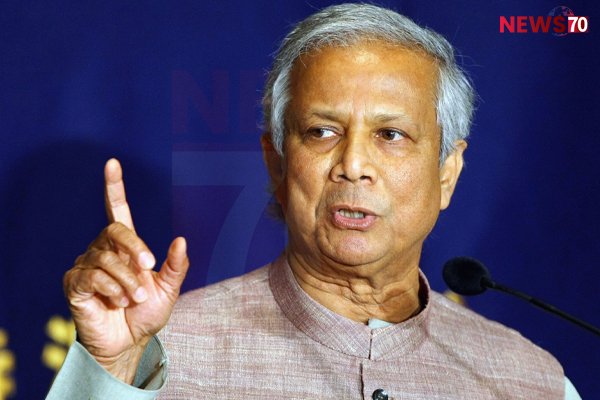
Seva Foundation and Nobel Peace Prize winner Dr. Muhammad Yunus have partnered with Grameen Bank and Aravind Eye Care to build a nationwide network of eye hospitals in Bangladesh. The initiative aims to combat preventable blindness by scaling Seva’s self-sustaining hospital model, supported by Grameen’s financing and Aravind’s training. The project aligns with Yunus’s long-standing mission to fight poverty through empowerment and community-driven development.
In the wake of his Nobel Peace Prize win, microcredit trailblazer Dr. Muhammad Yunus is already channeling the global spotlight toward new humanitarian efforts. One of his first major initiatives is a partnership between the Seva Foundation and Grameen Bank to expand eye-care services across Bangladesh — a country where more than 650,000 people live with preventable blindness.
Seva and Grameen have announced an ambitious plan to create a nationwide network of eye hospitals, an undertaking poised to become the largest project of its kind in the region. The effort gained momentum after Seva and its long-standing partners at India’s Aravind Eye Care System met with Yunus at Grameen headquarters to refine the strategy.
According to Dr. Suzanne Gilbert, Director of Seva’s Center for Innovation in Eye Care, the initiative will “take our proven model for creating self-sustaining eye hospitals and scale it to a level we’ve never attempted.” Under the collaboration, Grameen will finance the construction, equipment, and staffing, while Seva and Aravind will provide the training and operational systems. The meeting, she said, left the team “energized and inspired,” especially as it coincided with Yunus’s historic Nobel recognition.
For Yunus, the project reflects a natural extension of the philosophy that shaped Grameen Bank. Founded three decades ago with a mission unlike any traditional financial institution, Grameen pioneered microcredit — small, collateral-free loans aimed at helping the poorest lift themselves from poverty. Borrowers use these loans to launch small businesses, often purchasing livestock or materials for handicrafts. To date, the bank has distributed over US$5.7 billion in loans averaging about US$130 each, reaching millions of Bangladeshis. Remarkably, 94 percent of the bank’s equity is owned by its borrowers, and 97 percent of them are women.
The Nobel Committee praised Yunus and Grameen for proving that even the poorest individuals can drive their own development with the right support. As Yunus frequently says, a Grameen loan is “a ticket to self-discovery and self-exploration” — a philosophy that aligns closely with Seva’s commitment to sustainable, community-driven solutions to poverty and disease.
Dr. Yunus, born in Chittagong in 1940, studied economics at the University of Dhaka before earning his PhD at Vanderbilt University. After returning to Bangladesh, he developed the microcredit concept that would eventually spread to more than 100 countries. With his Nobel Peace Prize, he became the first Bangladeshi laureate and the first economist to receive the prize — a signal from the Nobel Committee that peace and poverty eradication are deeply interconnected.
As Seva, Aravind, and Grameen move forward, the partnership stands as a model of how financial innovation and public health can intersect — and how a single idea, nurtured at the grassroots, can ripple outward into transformative change.