
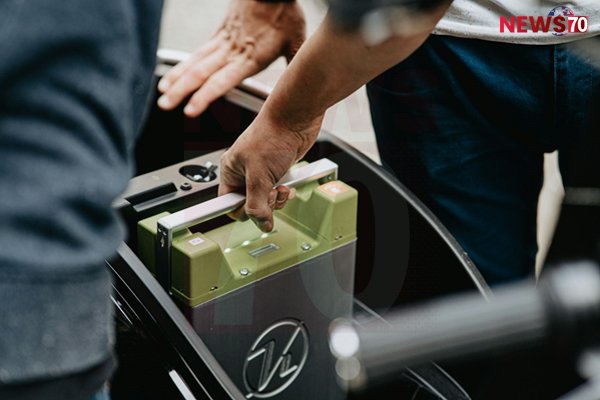
As more people buy used electric vehicles, battery health has become a key concern. Companies like Aviloo and ClearWatt offer independent diagnostics to assess EV battery condition, often more accurately than car manufacturers' built-in systems. Experts say that even EVs with less than 80% battery health can still be valuable if priced right, and some batteries find second lives in energy storage. Charging habits, battery cooling systems, and testing standards also influence long-term performance.
How Reliable is the Battery in a Used EV?
When Kerry Dunstan and his partner went shopping for an electric car this summer, one of their main concerns was the battery's condition. They eventually settled on a 2021 Nissan Leaf with 29,000 miles on the clock. The dealer assured them the battery's state of health (SOH) was still at 93%.
At a price of £12,500, they got a spacious EV with a generous boot. While Mr. Dunstan—who also owns a flashier electric Volvo SUV—admits he finds the Leaf a bit uninspiring, he says it’s done exactly what was expected over the past three months.
Traditionally, car buyers focused heavily on age and mileage. But as electric vehicles become more popular, assessing battery health has emerged as an even more critical factor for second-hand EV shoppers.
To help ease concerns about used EV batteries, Austrian company Aviloo claims it can independently and accurately assess a battery's health. Patrick Schabus, Aviloo’s chief product officer, says, "We really can, completely independently, determine the state of health of a battery."
Aviloo, which supplies battery health certificates to British Car Auctions, offers two main testing options. One is a premium test where a small data logger is plugged into the EV. Over several days, it monitors battery performance from full charge (100%) down to 10%, tracking real-time changes in voltage and current.
For those seeking faster results, there’s a flash test, which reads data from the vehicle's battery management system in under two minutes using a different diagnostic box. Aviloo’s system can provide detailed insights, including the health of individual battery cells.
CEO Marcus Berger notes that their findings sometimes differ significantly from what a car’s built-in diagnostics might report. He also pushes back on the common idea that batteries with an SOH below 80% are essentially worthless. “An EV with an SOH below 80% can still be a great car—it just needs to be priced accordingly,” he explains.
Lucy Hawcroft, an EV owner in New Zealand, recalls buying a Nissan Leaf about three years ago. The dealership originally told her the SOH was around 95%, but a year later, an independent mechanic found a noticeable drop. Despite this, the car still gets about 160km (100 miles) on a full charge—plenty for the short 10km trips she and her husband usually make. Still, she admits friends with 400km-range EVs have an edge: “That would be ideal.”
For David Smith, sales director at Cleevely Electric Vehicles in Cheltenham, detailed battery analysis is key. Most buyers ask for battery condition reports, and they provide them through ClearWatt, another independent battery analytics firm. “They're completely independent. We can't interfere with the reports,” Smith says. “Seeing the report helps close the sale nine times out of ten.”
His colleague, managing director Matt Cleevely, adds that in many cases, it’s possible to replace failing modules or groups of cells rather than swapping out the entire battery—making repairs far more affordable.
When it comes to battery longevity, Simona Onori of Stanford University says charging habits play a big role. “There is likely a sweet spot between frequent fast charging and avoiding it altogether,” she says. However, more research is needed on this topic.
According to Max Reid, head of battery costs at research firm CRU, battery tech has significantly advanced in recent years. While older EV batteries might last for 500–1,000 charging cycles, some of the latest cells can last up to 10,000 cycles.
Even when batteries no longer serve EVs efficiently, they can find second lives. Paul Chaundy of Second Life EV Batteries in Dorset says many businesses repurpose used EV batteries for on-site energy storage—especially where limited grid connections exist. For example, some use them to charge multiple electric forklifts even when the infrastructure can only support two or three at a time.
Chaundy also points out the need for more standardization in SOH measurement, as automakers use different methods to determine battery health. He emphasizes that understanding how the previous owner treated the battery—such as whether they frequently fast-charged to 100%—can be key to assessing its long-term viability.
Battery condition uncertainty still deters some buyers from the used EV market. But companies like Aviloo argue that their technology can accurately uncover a battery’s true health. Meanwhile, industry experts note that some electric vehicles are lasting far longer than skeptics once assumed.
Take Mr. Dunstan’s Leaf, for example. Earlier versions of this model lacked the advanced liquid-cooled battery systems found in many EVs today. Research by US firm NimbleFins suggests older Leafs often show significant range loss over time. However, Dunstan isn’t bothered.
“I charge both my EVs to 100% and I put them on charge when I need to charge them—I don’t worry about it,” he says.