
Bangladesh exports around $850 million worth of halal products annually, mostly agriculture-based. Non-Muslim countries are showing growing interest due to quality and hygiene. Experts say the global halal market, valued at nearly $3 trillion and projected to reach $9.45 trillion by 2034, offers huge opportunities for Bangladesh. Challenges include limited awareness, lack of labs and technology, and skilled manpower shortages. Experts call for automated certification, advanced labs, a Halal Certification Board, and international promotion.
Many non-Muslim countries are increasingly showing interest in halal products, according to Dhaka Chamber of Commerce and Industry (DCCI) Senior Vice-President Razeev H Chowdhury.
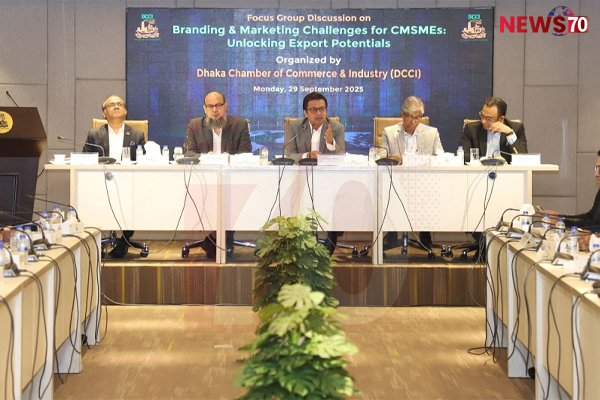
Speaking at a DCCI event in Dhaka today, Chowdhury said Bangladesh exports about $850 million worth of halal products annually, most of which are agriculture-based.
He noted that halal products are gaining popularity worldwide, including in non-Muslim countries, because of their high quality and hygienic production processes.
Chowdhury said the rapid expansion of the global halal market presents a significant opportunity for Bangladesh to increase its exports.
“As the world’s fourth-largest Muslim-majority nation with abundant agricultural, livestock, and fisheries resources, Bangladesh has strong potential in this sector,” he said.
However, he expressed concern that the majority of halal products globally are produced in non-Muslim countries.
“As a Muslim-majority country, this should be a wake-up call for us. Our readymade garment sector has already proven Bangladesh’s capabilities internationally. Now, it’s time to make the halal industry a new engine of economic growth,” he added.
Chowdhury highlighted that the halal industry has evolved beyond religious or dietary boundaries, emerging as a rapidly expanding global sector valued at nearly $3 trillion and projected to reach $9.45 trillion by 2034.
Despite the potential, Bangladesh faces several structural and institutional obstacles, including limited awareness of halal standards, inadequate modern laboratory facilities, lack of technology, and shortages of skilled manpower.
To address these challenges, he proposed automating the halal certification process, establishing advanced laboratories, and strengthening traceability and logistics systems.
He also called for the formation of a dedicated Halal Certification Board with representatives from the Bangladesh Standards and Testing Institution (BSTI) and the Islamic Foundation to ensure international acceptance of Bangladeshi halal certificates.
Additionally, Chowdhury urged Bangladesh to follow the guidelines set by the Standards and Metrology Institute for Islamic Countries (SMIIC) and pursue stronger diplomatic and commercial efforts to promote halal exports globally.
The event was also attended by Md Abul Kalam Azad, Assistant Manager (Export) of Paragon Group; Sadiq M Alam, Managing Director of Metamorphosis; and AGM Sayadul Haq Bhuiyan, Head of Supply Chain and Export at Bengal Meat.