
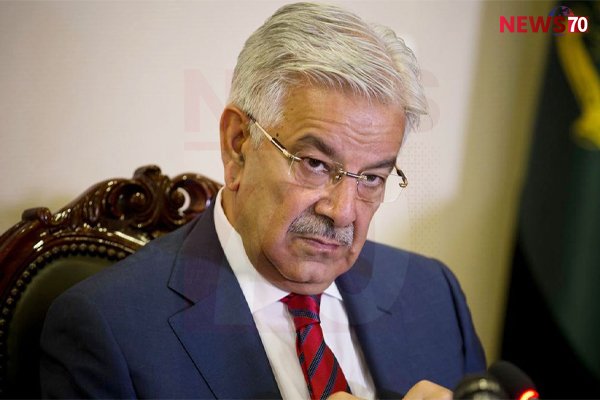
Pakistan’s Defense Minister Khawaja Asif warned that any attacks on Pakistan from Afghan soil would prompt retaliation deep into Afghanistan. Talks between the two nations in Istanbul failed, with Asif accusing Kabul of being influenced by India and using Afghan territory against Pakistan. He criticized the Taliban government’s legitimacy and authority. The UN expressed concern over the failed talks, hoping the conflict would not resume.
Pakistan Warns Taliban: Attacks from Afghan Soil Would Trigger Retaliation
Pakistan’s Defense Minister Khawaja Asif on Wednesday warned the Taliban government that any terrorist attack on Pakistan using Afghan territory would prompt Islamabad to strike “deep into Afghanistan.”
Earlier today, Pakistan’s Information Minister Ataullah Tarar announced that during talks in Istanbul, Turkey, between the two countries on border terrorism originating from Afghan soil, both sides “failed to reach an effective solution.”
Answering journalists’ questions in the Parliament House about Pakistan’s options in the event of cross-border attacks from Afghanistan, Khawaja Asif said, “We will strike, and we will certainly strike.”
The defense minister added, “If they use their territory and violate ours, then if we have to go deep into Afghanistan to retaliate, we will definitely do so.”
Earlier, after the second round of talks between the two sides began on October 25, Khawaja Asif had warned that failure to reach an agreement could mean “open war.”
Regarding today’s failed talks, Asif said, “At no level in Kabul were they sincere. Under India’s direction and acting as their ‘agents,’ Fitna al-Hindustan is trying to use Afghanistan to position itself against Pakistan.”
The Pakistani defense minister alleged that the entire Kabul leadership is under India’s influence.
Asif said that working groups from both Pakistan and Afghanistan were present in Istanbul. Although an agreement was nearly finalized, Kabul blocked it.
He added, “Whenever something was finalized and a draft agreement prepared—I think this happened three or four times—they contacted Kabul, and a negative response came from there. That’s why we couldn’t reach any agreement with them.”
Khawaja Asif further said that if Kabul’s leaders choose the path of conflict, “so be it.”
Speaking about issues arising during the recent talks, Asif said the other side acknowledged that the banned Tehrik-i-Taliban Pakistan (TTP) must be prevented from attacking Pakistan and that they were “using our [Afghan] soil.”
The defense minister added that although there was agreement in principle on many points, they were unwilling to commit it in writing.
When asked about including the TTP in discussions, Asif said, “This was not discussed. Even if it had been proposed, we would have rejected it outright.”
He said that mediator countries Qatar and Turkey are now aware of Kabul’s “flaws in perspective.” Asif stated, “We tried with full sincerity to ensure Pakistan and Afghanistan can be good neighbors and live in peace.”
The Pakistani minister added, “But if they have handed the reins over to Delhi, it will be difficult.”
When asked about the prospects for a better understanding, Asif joked, “One can only pray, there is no remedy for this.”
“Afghanistan Does Not Meet the Definition of a State”
The defense minister said the legitimacy of Afghanistan’s Taliban government is unclear. Except for a handful of countries, it lacks international recognition.
Khawaja Asif claimed that the Taliban government does not have authority over the entire country. Afghanistan is effectively fragmented, with one or more powerful terrorist groups operating independently.
He said, “Afghanistan does not meet the definition of a state, and even the interim administration recognizes this. They themselves are involved in killings and are benefiting financially from being in power.”
Asked whether the Afghan Taliban is leading their country toward a situation like the U.S. military intervention in Tora Bora in December 2001, Asif replied, “That is certainly a possibility.”
UN Expresses Concern Over Failed Talks
The United Nations has expressed concern over the breakdown of talks between Pakistan and Afghanistan. The global body hopes that “conflict will not resume.”
When UN spokesperson Stephane Dujarric was asked about the failed discussions, he said, “Yes, this is certainly a matter of concern. We hope that even though the talks are on hold, fighting will not restart.”
Dujarric made these remarks to reporters during a regular briefing at the UN headquarters in New York.