
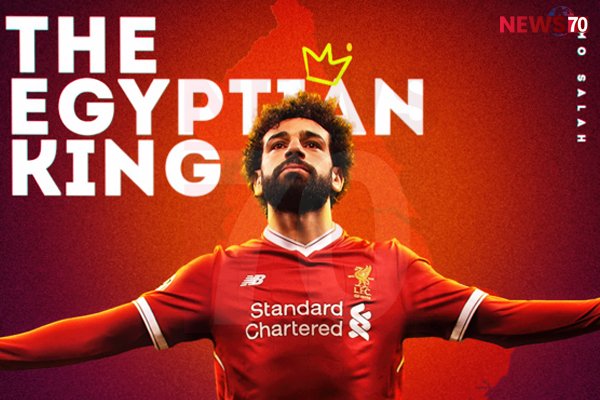
From humble beginnings in Nagrig, Mohamed Salah rose to become Egypt’s first global football superstar. Childhood coaches, family sacrifices, and village memories shaped the Liverpool legend who continues to inspire millions of Egyptians and young fans worldwide.
“Every time I walk through these gates, I remember how he used to glide across the pitch, how he moved with the ball. It was unlike anything else.”
One of Mohamed Salah’s early coaches pushes open the new dark-green gates of the youth centre in Nagrig, a village three hours north of Cairo. This is where the journey began for one of football’s greatest forwards—a player who helped fire Liverpool to the Premier League title in 2020.
On the dusty streets of Nagrig, a seven-year-old Salah would play with friends, imagining himself as Brazil’s Ronaldo, France’s Zinedine Zidane, or Italy’s Francesco Totti.
“Mohamed was smaller than most of his teammates, but he was doing things the older boys couldn’t,” recalls coach Ghamry Abd El-Hamid El-Saadany, pointing to the artificial pitch now named in Salah’s honour. “His shots were thunderous, and his hunger to succeed was clear even then.”
Now 33, Salah is preparing for his ninth season at Liverpool, where he has scored an astonishing 245 goals in 402 matches since his 2017 arrival.
Egypt’s first true global football superstar has lifted every major domestic trophy in England, along with the Champions League, yet international glory with his country still eludes him. With the Africa Cup of Nations set for December and the 2026 World Cup looming, BBC Sport travelled to Egypt to explore what Salah means to a football-obsessed nation of 115 million—and how a boy from humble beginnings grew into a national icon.
“I still feel my father’s happiness whenever I watch Salah play,” says Lamisse El-Sadek at the Dentists Café in east Cairo. The café—named after the former owner’s old profession—has become a gathering spot for Liverpool fans.
Wearing a Liverpool shirt bearing her late father’s name, Lamisse recalls: “After Salah joined Liverpool, my father and I watched every single game together. He passed away two years ago, but those matches were the highlight of our week. Even if I missed part of the game because of school or work, he would send me updates, minute by minute.”
For her, Salah’s story is deeply personal. “He didn’t come from privilege. He worked relentlessly, made sacrifices, and pushed through hardship to reach where he is now. Many of us see our own struggles reflected in him.”
“All the kids want to be Salah”
The farming village of Nagrig, nestled in Egypt’s Nile Delta among jasmine fields and watermelon patches, is a place where water buffalos, donkeys, and motorbikes share the dusty roads. It was here, in this quiet corner of the country, that one of the world’s greatest forwards—affectionately known as the Egyptian King—spent his childhood.
“Salah’s family is the foundation and the secret behind his success,” says Ghamry Abd El-Hamid El-Saadany, who considers himself Salah’s first coach after taking him under his wing at the age of eight. “They’ve always lived here with humility, respect, and strong values. That’s why people love them so much.”
The village youth centre, once modest, has been transformed into a modern facility in honour of its most famous son. The lush green surface now looks fit for a professional training ground.
“They made countless sacrifices when Mohamed was young,” El-Saadany continues, standing beside a giant photo of Salah lifting the Champions League trophy. “His father and uncle were especially supportive. His uncle, in fact, is now the chairman of this very centre.”
Salah’s presence is felt everywhere in Nagrig. Children dart around in Liverpool and Egypt jerseys with his name and number emblazoned on the back. A mural of him adorns the wall of his former school, while tuk-tuks rattle past with stickers of his smiling face plastered on the front.
In the heart of the village stands the barber shop where a teenage Salah once had his hair cut after training. “I’m the one who gave him that curly hairstyle and beard,” laughs barber Ahmed El Masri. “His friends teased him for coming here instead of a city salon, but the next day they’d be shocked at how good he looked. They’d all ask him: ‘Who’s your barber?’”
El Masri remembers Salah’s talent vividly—on the youth centre pitch, on the streets, and even on the PlayStation. “He always chose Liverpool when we played video games,” he recalls. “The other boys picked Manchester United or Barcelona, but he’d always go with Liverpool. And now, all the kids in the village want to be just like him.”
Salah’s journey beyond Nagrig began at 14, when he joined Cairo-based club Arab Contractors, also known as Al Mokawloon. His daily routine became legendary: leaving school early, enduring long commutes for training, and dedicating himself fully to the game. That discipline laid the foundation for the player who would one day become Egypt’s first global football superstar.