
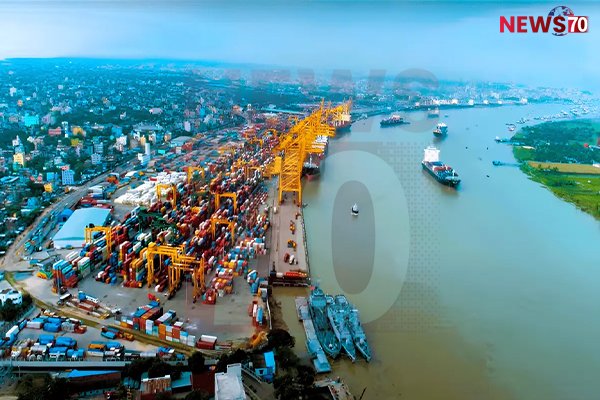
The Chattogram Port Authority has cracked down on traders using lighter vessels as ‘floating warehouses’ to hoard wheat and essentials, creating artificial shortages to inflate prices. Six vessels were caught overstaying, with nearly 7,000 tonnes of wheat held offshore. CPA vowed strict penalties, tighter monitoring, and licence suspensions to curb the practice, which has worsened food inflation in Bangladesh.
Ctg Port Authority cracks down on ‘floating warehouses’ hoarding wheat
The Chattogram Port Authority (CPA) has uncovered a scheme by traders to use lighter vessels as ‘floating warehouses’ for hoarding wheat and other essentials, creating artificial shortages to push up prices.
A mobile court-led drive at the port’s outer anchorage this week found several vessels overstaying beyond the 72-hour limit after unloading from mother ships. Six vessels owned by Gazipur Logistics and Shipping were identified, including Umme Kulsum, which still held nearly 7,000 tonnes of wheat despite completing unloading two weeks earlier.
“These food-carrying vessels must leave within three days. Despite repeated warnings, some traders continue to break the rules,” CPA Secretary Omar Faruk told The Business Standard. He warned that strict penalties would follow for any vessel used as a floating warehouse.
Officials said deliberate delays in clearance were causing supply gaps, forcing millers and retailers to raise flour and staple prices. One senior CPA official described the practice as a “direct attempt to destabilise the market for profit.”
The crackdown also revealed other violations: Gulshan Ara overstayed with 1,150 tonnes of stone, Bashundhara-27 operated with faulty firefighting gear, while several vessels were fined for expired licences, invalid fitness papers, and safety breaches.
This is not the first such incident. Similar operations in 2022 and 2023 found rice and wheat held offshore to manipulate prices, particularly before Ramadan. Traders reportedly exploit the anchorage as a cheaper storage option, bypassing warehouses and transport costs.
Consumer rights groups say the practice worsens food inflation, with imported wheat supplies disrupted. “Unscrupulous traders exploit vessels’ huge capacity to create shortages. CPA must act consistently to protect consumers,” said SM Nazer Hossain, vice president of the Consumers Association of Bangladesh.
The CPA has pledged intensified monitoring, stricter fines, and licence suspensions to deter violators. Economists, however, caution that without sustained enforcement, traders will find ways to adapt, leaving consumers vulnerable to price hikes.