
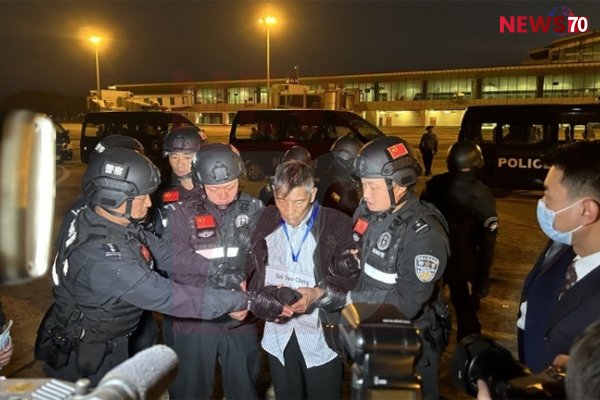
China has sentenced five senior members of Myanmar’s notorious Bai family mafia to death for running large-scale online scams and other crimes. A total of 21 members were convicted of fraud, homicide, and drug trafficking. The group operated 41 scam compounds in Laukkaing, earning over 29 billion yuan and causing multiple deaths. The harsh sentences mark Beijing’s intensified crackdown on Southeast Asian cybercrime networks and serve as a warning to similar criminal groups.
China Sentences Top Members of Infamous Myanmar Mafia to Death in Major Anti-Scam Crackdown
A Chinese court has sentenced five senior members of a notorious Myanmar mafia to death as part of Beijing’s ongoing crackdown on scam operations across Southeast Asia.
According to a state media report published on the court’s website, a total of 21 Bai family members and associates were convicted of fraud, homicide, intentional injury, and other crimes.
The Bai family was among several powerful mafias that rose to prominence in the 2000s, transforming the once-impoverished border town of Laukkaing into a booming center for casinos and red-light districts.
In recent years, the group shifted its focus to large-scale online scams that trapped and abused thousands of trafficked workers—many of them Chinese—forcing them to defraud others in criminal schemes worth billions of yuan.
Mafia boss Bai Suocheng and his son Bai Yingcang were among the five men sentenced to death by the Shenzhen Intermediate People’s Court. The other three were Yang Liqiang, Hu Xiaojiang, and Chen Guangyi.
Two additional Bai family members received suspended death sentences, while five were given life imprisonment. Nine others were handed prison terms ranging from three to 20 years.
Authorities said the Bai mafia, which maintained its own militia, operated 41 compounds for cyberscam activities and casinos. These criminal operations generated more than 29 billion yuan ($4.1 billion; £3.1 billion) and resulted in six deaths, one suicide, and multiple injuries among Chinese citizens.
The harsh sentences reflect China’s intensified campaign to dismantle widespread scam networks in Southeast Asia and serve as a stern warning to other crime syndicates.
In a related case in September, a Chinese court also sentenced 11 members of the Ming family—another influential clan from Laukkaing—to death.
The rise of these families in the 2000s was reportedly supported by Min Aung Hlaing, now head of Myanmar’s military government, who sought to strengthen his influence in Laukkaing after ousting the former warlord.
Among the clans, the Bais held the greatest power. “At that time, our Bai family was the most powerful in both political and military circles,” Bai Yingcang said in a state media documentary aired in July.
The same documentary featured testimony from a former scam center worker, who described brutal abuse at the hands of the Bai organization. He recounted being beaten, having his fingernails pulled out with pliers, and having two fingers severed with a kitchen knife.
Bai Yingcang, now sentenced to death, was also separately convicted of trafficking and manufacturing 11 tonnes of methamphetamine, according to state media reports.
The downfall of these families began in 2023, following pressure from Beijing on the Myanmar junta to curb scam operations in Laukkaing. That year, Chinese authorities issued arrest warrants for key figures in the networks.
In early 2024, Bai Suocheng, the Bai family patriarch and longtime warlord, was handed over to Chinese authorities by Myanmar.
A Chinese investigator interviewed in the July documentary explained Beijing’s motivation:“The reason the Chinese government has gone to such great lengths to pursue the four families is to send a warning—no matter who you are or where you are, if you commit heinous crimes against the Chinese people, you will pay the price.”