
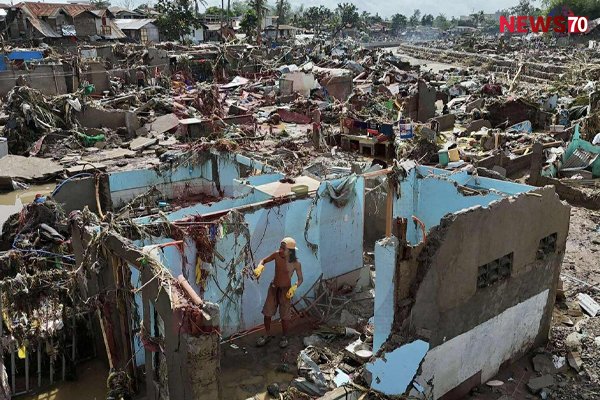
Typhoon Kalmaegi, known as Tino in the Philippines, has killed at least 188 people in the Philippines and 5 in Vietnam, leaving widespread destruction. The storm triggered floods, landslides, and property damage, displacing tens of thousands. Relief operations are underway in both countries, with Vietnam deploying 260,000 personnel and the Philippines declaring a state of emergency. The typhoon is now moving toward Cambodia and Laos.
Typhoon Kalmaegi Claims Nearly 200 Lives as It Moves from Philippines to Vietnam
Typhoon Kalmaegi has left a trail of destruction across Southeast Asia, killing at least 188 people in the Philippines and five in Vietnam, according to the latest official figures. The storm, locally known as Tino in the Philippines, is now moving westward toward Cambodia and Laos after battering central Vietnam on Thursday with winds reaching 149 km/h (92 mph).
In Vietnam, towns along the central coast were strewn with debris as the full force of the typhoon swept through overnight. Strong winds uprooted trees, tore roofs from homes, shattered windows, and forced thousands to seek shelter in schools and other public buildings. The Vietnamese army has been deployed to assist with relief efforts and restore essential services. Authorities have also warned of potential flooding in low-lying areas, which have already experienced record rainfall over the past week that claimed 50 lives.
Earlier this week, Kalmaegi devastated parts of the Philippines. Torrential rains triggered flash floods and landslides, particularly in poorer areas, destroying homes and infrastructure. Tens of thousands were evacuated, with the island of Cebu among the hardest hit. Vehicles were swept away in raging floodwaters, and entire neighborhoods were obliterated. Residents described the storm as unlike anything they had previously experienced. In Talisay City, one survivor, Mely Saberon, told reporters, “We don't have any home anymore. We weren’t able to salvage anything. We’ve experienced many typhoons, but this one was different.”
The Philippine government declared a state of emergency early on Thursday, citing mass casualties, widespread property damage, and major disruptions to livelihoods. Authorities continue to coordinate evacuation and relief efforts for affected populations.
In Vietnam, Prime Minister Pham Minh Chinh held an emergency online meeting to oversee the response. “We must reach isolated areas and ensure people have food, drinking water, and essential supplies,” he said. “No one should be left hungry or cold.” More than 260,000 soldiers and personnel, along with over 6,700 vehicles and six aircraft, have been mobilized to aid relief operations. Key expressways and airports were temporarily closed, and hundreds of thousands of residents were evacuated ahead of the storm’s landfall.
The typhoon caused severe flooding and structural damage in Dak Lak province, located roughly 350 km northeast of Ho Chi Minh City. Many homes collapsed or were inundated as heavy rain and strong winds continued to lash the area.
As the storm moves toward Cambodia and Laos, authorities across the region are on high alert. Emergency services continue to work tirelessly to provide aid and restore basic infrastructure, while survivors begin the daunting task of cleaning up debris and rebuilding their lives.