
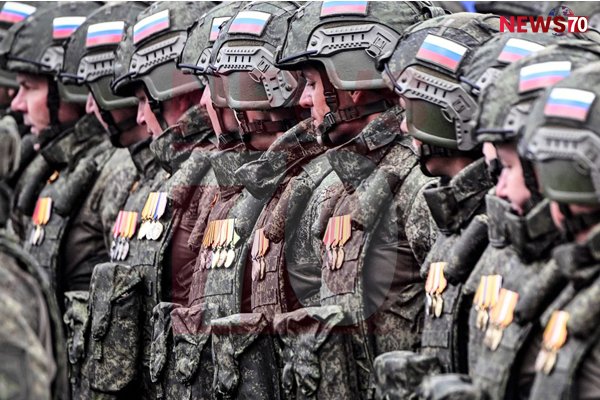
A BRAC Migration Programme report reveals that Bangladeshi workers are being deceived with promises of legal jobs in Russia but end up coerced into fighting in the Russia-Ukraine war. Many travelled on valid work visas only to have their passports seized and be forced into combat. Several are missing or feared dead. Victims’ families and BRAC are urging urgent government action to rescue those trapped and prevent further exploitation through weak migration oversight and fraudulent recruiting networks.
Bangladeshis Tricked Into Russia’s War Under False Promises of Legal Jobs
A rising number of Bangladeshi nationals are being deceived into travelling to Russia with promises of legal employment, only to be coerced into fighting in the Russia-Ukraine war, according to a new investigation by the BRAC Migration Programme.
The report — titled “Promises Written in Blood: How Legal Migration Turned into Forced Recruitment in the Russia-Ukraine War” — draws on survivor testimonies and family accounts. It reveals that at least ten Bangladeshi men, lured by assurances of secure jobs and good pay, were instead sent to combat zones. Several are feared dead.
According to BRAC, the victims travelled to Russia on legitimate work visas, expecting employment in oil, construction, or logistics. But upon arrival, their passports were confiscated, and they were forced into auxiliary military units and dispatched to training camps near the front lines.
The report calls for immediate action from the government and international partners, warning that “untrained foreign labourers are being used as expendable manpower.”
Legal Migration Turned Trap
BRAC’s findings show that most victims followed all legal migration procedures — obtaining genuine visas, departing from official airports, and carrying valid contracts. Yet once in Russia, their passports and phones were taken “for processing,” and they were coerced into signing “voluntary service agreements” before being sent to undisclosed military sites.
The report also highlights a parallel network of illegal trafficking. Local recruiting agents, posing as job providers, send workers to Russia only to hand them over to intermediaries linked to the military. Many of these men end up as forced labourers or front-line combatants.
The exact number of Bangladeshis trapped in the conflict remains unclear. The Criminal Investigation Department (CID) estimates that around 2,000 Bangladeshis have travelled to Russia with work visas in recent years, in addition to students and others. BRAC believes hundreds may now be stranded in war zones.
Lives Shattered by Deception
Among them is Afzal Hossain Meraj, who travelled to Russia in August 2023 to work as a welder with a promised salary of Tk 70,000. He paid Tk 6.5 lakh to a recruiting agency in Uttara, including training costs.
Four months later, a broker in Russia offered him what seemed a better opportunity — enlistment with a Tk 26 lakh signing bonus and a Tk 3.3 lakh monthly salary. The offer also included Tk 15 lakh compensation for injuries and the promise of Russian citizenship if the country won the war.
Tempted, Meraj agreed. But soon after, his passport was seized, and he was sent to the front line.
“We were lost and helpless when my son secretly called from the war zone on WhatsApp and IMO,” said his father, Ali Hossain. “He said he could be killed at any time.”
Meraj witnessed two fellow Bangladeshis die in combat. He was later shot in the thigh, escaped from a hospital, and reached the Bangladesh embassy in Moscow, which helped him return home in September.
“Yes, we got some money,” his father said. “But they sent my son to a war zone with lies. Life is more important than money.”
Missing and Feared Dead
Not everyone has made it back.
Ayan Mondol from Bagerhat last contacted his family months ago, saying he was being moved toward the Ukrainian border. He is believed to have been killed in a drone strike.
Amit Barua from Cumilla was photographed in a Russian military uniform and has been missing ever since.
Mohsin Ahmed from Gafargaon, Mymensingh, went to Russia for a welding job but was also forced into the army. His brother Mahfuz Ahmed told The Daily Star that Mohsin was injured in a drone attack, treated for three days, and sent back to the battlefield.
On April 21, his family appealed to the Foreign Ministry for help. “It’s uncertain whether my brother will ever return,” Mahfuz said. “We haven’t heard from him in months.”
He added that Russian authorities have tightened surveillance after some Bangladeshis managed to escape and return with travel passes.
Weak Migration Oversight
BRAC has submitted applications for the rescue of victims to the Ministry of Foreign Affairs and shared case files with the CID for investigation. The organisation is also offering legal aid and psychosocial support to families of the victims.
The report warns that these incidents expose “serious flaws in Bangladesh’s migration management system.” Without stronger oversight, it says, legal migration channels could continue to be exploited for trafficking and coercion, endangering both the country’s international standing and future labour deals.
It also criticises the slow, reactive coordination between agencies and the foreign ministry, calling for proactive preventive measures.
Government Response
Mostafizur Rahman, additional superintendent (Trafficking in Human Being) of the CID, said six cases have been filed related to trafficking to Russia.
“Alongside legal migration, people were also sent illegally and ended up in war zones,” he said. “We found at least ten Bangladeshis who were sent illegally over the past two years. Only two have returned; one remains in contact, and seven others — four or five of whom are presumed dead — are missing.”
He added that investigators suspect over 30 Bangladeshis have been killed in the war so far. No bodies have been repatriated. Forced recruitment, however, has “almost stopped since June this year,” he noted.
Calls for Urgent Action
Shariful Hasan, associate director of the BRAC Migration Programme, said the real number of Bangladeshis trapped or killed in Russia remains unknown. “Reports of deaths keep coming from multiple sources,” he said.
He also voiced concern about a Bangladeshi youth using a verified Facebook account under the name Md Sohel, who is reportedly encouraging others to join the Russian war effort. “Despite this, no visible action has been taken to raise awareness,” he added.
Shariful urged the government to launch a nationwide survey to identify missing individuals and start a strong awareness campaign.
“If we don’t act now,” he warned, “the cost will be more human lives.”