
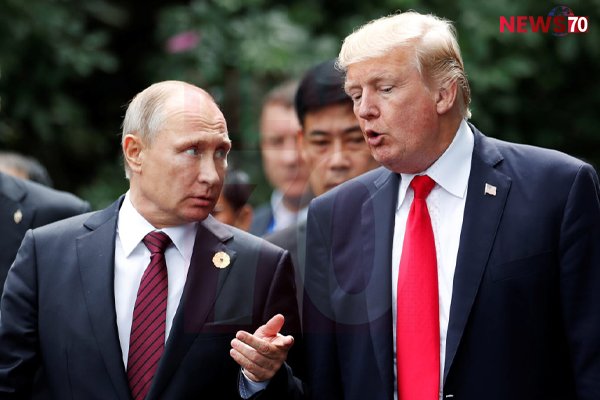
Donald Trump’s planned summit with Vladimir Putin has been suspended indefinitely, signaling major hurdles in his effort to end the Ukraine war. Despite success in mediating a Gaza ceasefire, Trump faces limited leverage in Ukraine, where neither Russia nor Ukraine is willing to compromise. His shifting tactics — from sanction threats to peace proposals — have yielded little progress, as Putin appears to exploit Trump’s desire for a diplomatic win.
Trump’s Planned Summit with Putin Suspended Amid Struggles to Replicate Gaza Breakthrough
Reports of a forthcoming US-Russia leadership summit appear to have been overstated.
Just days after Donald Trump announced plans to meet Russian President Vladimir Putin in Budapest “within two weeks or so”, the summit has been suspended indefinitely. A preliminary meeting between the two nations’ top diplomats has also been cancelled.
“I don’t want to have a wasted meeting,” President Trump told reporters at the White House on Tuesday afternoon. “I don’t want to have a waste of time, so I’ll see what happens.”
The on-again, off-again summit marks the latest turn in Trump’s ongoing efforts to broker an end to the war in Ukraine — a topic that has regained his focus following his success in negotiating a ceasefire and hostage release deal in Gaza.
While in Egypt last week to celebrate that Gaza truce, Trump reportedly turned to his lead negotiator, Steve Witkoff, with a new directive:
“We have to get Russia done,” he said.
However, the unique conditions that enabled a breakthrough in Gaza may be impossible to replicate in Ukraine, where the war is nearing its fourth year.
Limited Leverage in Ukraine
According to Witkoff, the key factor behind the Gaza success was Israel’s decision to attack Hamas negotiators in Qatar — a move that angered Arab allies but gave Trump the leverage needed to pressure Israeli Prime Minister Benjamin Netanyahu into making concessions.
Trump’s long record of strong support for Israel, dating back to his first term — including moving the US embassy to Jerusalem, reversing Washington’s stance on West Bank settlements, and backing Israel’s campaign against Iran — bolstered his influence.
In fact, Trump is reportedly more popular among Israelis than Netanyahu himself, giving him unusual sway over the Israeli leader. Combined with his political and economic ties to key Arab figures, Trump possessed significant diplomatic capital to drive the Gaza deal forward.
In contrast, his position in the Ukraine conflict is far weaker. Over the past nine months, he has alternated between pressuring Putin and Zelensky, with little progress.
Trump has threatened new sanctions on Russian energy exports and promised long-range weapons to Ukraine, yet he also acknowledged that such steps risk economic disruption and further escalation.
Meanwhile, he has criticized Ukrainian President Volodymyr Zelensky, at one point cutting off intelligence sharing and halting arms deliveries, only to reverse course under pressure from European allies concerned that Ukraine’s collapse could destabilize the entire region.
Despite his reputation for dealmaking, Trump’s face-to-face meetings with both Putin and Zelensky have done little to advance peace talks.
Putin’s Tactical Maneuvering
Observers suggest that Putin may be exploiting Trump’s eagerness for a deal — and his belief in personal diplomacy — to his advantage.
In July, Putin agreed to a summit in Alaska just as Trump was poised to approve a sanctions package supported by Senate Republicans. The legislation was soon put on hold.
More recently, as reports circulated that the White House was considering sending Tomahawk missiles and Patriot air defense systems to Kyiv, Putin called Trump directly — after which Trump publicly floated the idea of a Budapest summit.
The following day, Trump hosted Zelensky at the White House, but the meeting reportedly ended tensely and without results.
Trump later insisted he was not being manipulated by Putin, saying,
“You know, I’ve been played all my life by the best of them, and I came out really well.”
Zelensky, however, pointed out the pattern:
“As soon as the issue of long-range mobility became a little further away for us — for Ukraine — Russia almost automatically became less interested in diplomacy,” he said.
Between Two Leaders, No Progress
In the span of a few days, Trump shifted from considering missile shipments to Ukraine to planning a summit with Putin, and even privately urging Zelensky to cede all of Donbas, including areas Russia has failed to seize.
He has now settled on a call for a ceasefire along current front lines, a proposal Moscow has rejected.
During his campaign last year, Trump boasted that he could end the Ukraine war in a matter of hours. He has since walked back that claim, admitting that ending the conflict is far more difficult than he expected.
It marks a rare acknowledgment of the limits of his power — and of the challenge in finding peace when neither side is willing, or able, to concede.